
Digital Bloom builds on the research and design platform of the studio Crafted and follows the theme of the doctoral thesis Originality of Authorial Design in the Age of Digital Technologies. The project explores the shift in authorship in contemporary design, where the boundary between controlled form and generative process gradually becomes blurred.
The object works with the contrast of two layers of form. The base is a pure cylinder – a reduced, geometrically stable form that represents rationality, order, and a consciously controlled authorial decision. This form functions as a silent, minimalist carrier of the system.
This stability is brought about by an organic glass structure with a light effect that distorts the surface and grows over it like digitally generated growth. This layer acts as visual entropy – as a fragment of a process that is no longer fully controlled by the author, but arises at the interface between material, light, and digital logic.
In the context of the BADW 2026 theme, the project reflects on themes of the future, climate transformation, wild urban vegetation, and the dystopian emptiness of the architectural environment. The vase becomes a microcosm of these layers – between order and disruption, between architecture and organic fragmentation.
In this sense, Digital Bloom does not work with the object as a closed form, but as a process of ongoing transformation.
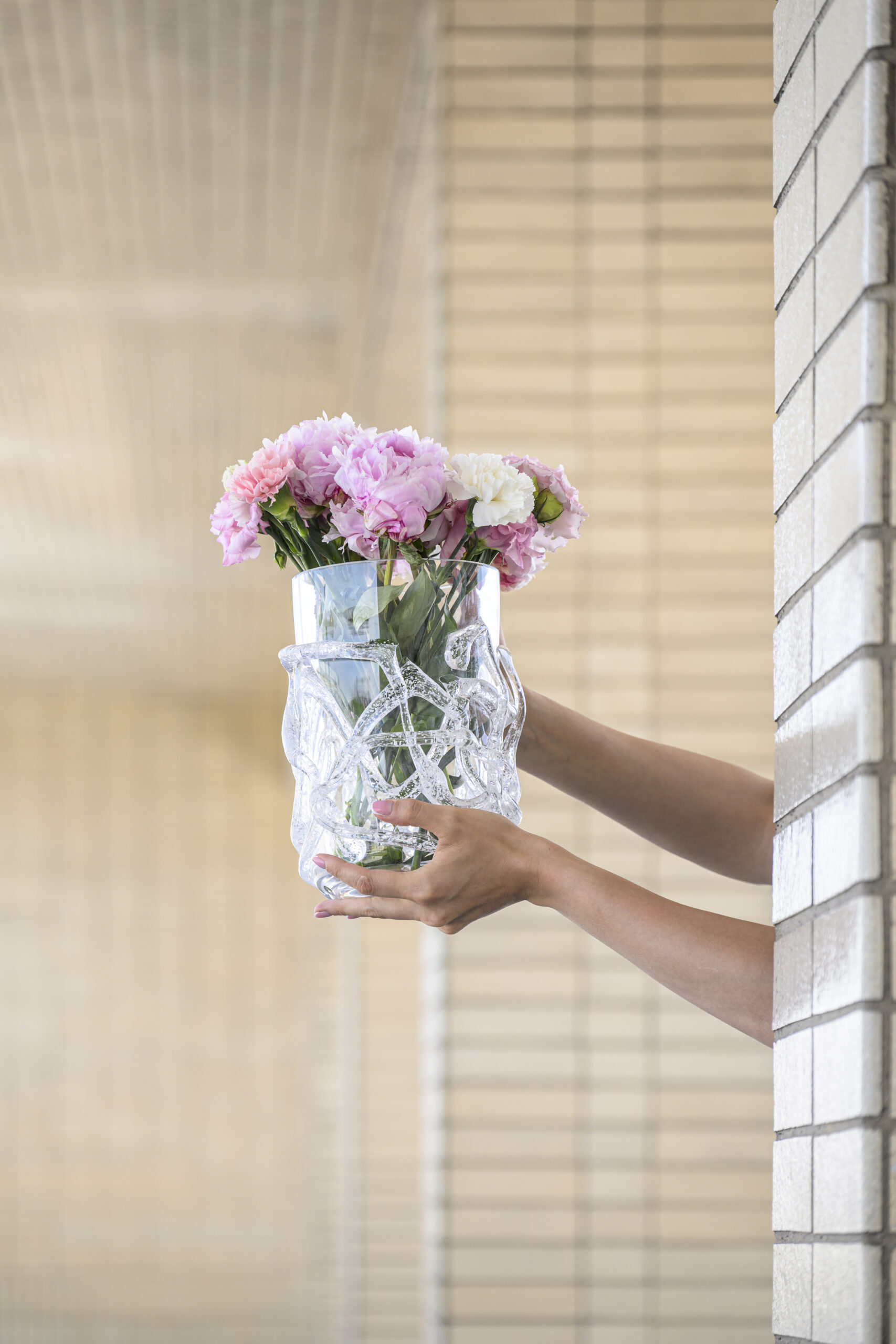
Digital Bloom is based on the research and design platform of the Crafted studio and follows up on the dissertation topic “Originality of Authorial Design in the Era of Digital Technologies”. The project explores the shift of authorship in contemporary design, where the boundary between controlled form and generative process is gradually blurring.
The object works with the contrast of two layers of form. The base consists of a clean cylinder – a reduced, geometrically stable form that represents rationality, order, and a consciously guided authorial decision. This form functions as a quiet, minimalist carrier of the system.
An organic glass structure with a lighting effect enters this stability, disrupting the surface and overgrowing it like a digitally generated growth. This layer acts as a visual entropy – as a fragment of a process that is no longer fully controlled by the author, but emerges at the interface of material, light, and digital logic.
In the context of the BADW 2026 theme, the project reflects motifs of the future, climate transformation, wild urban vegetation, and the dystopian emptiness of the architectural environment. The vase becomes a micro-model of these layers – between order and disruption, between architecture and organic overgrowth. In this sense, Digital Bloom does not work with the object as a closed form, but as a process of ongoing transformation.
 English
 Slovak